
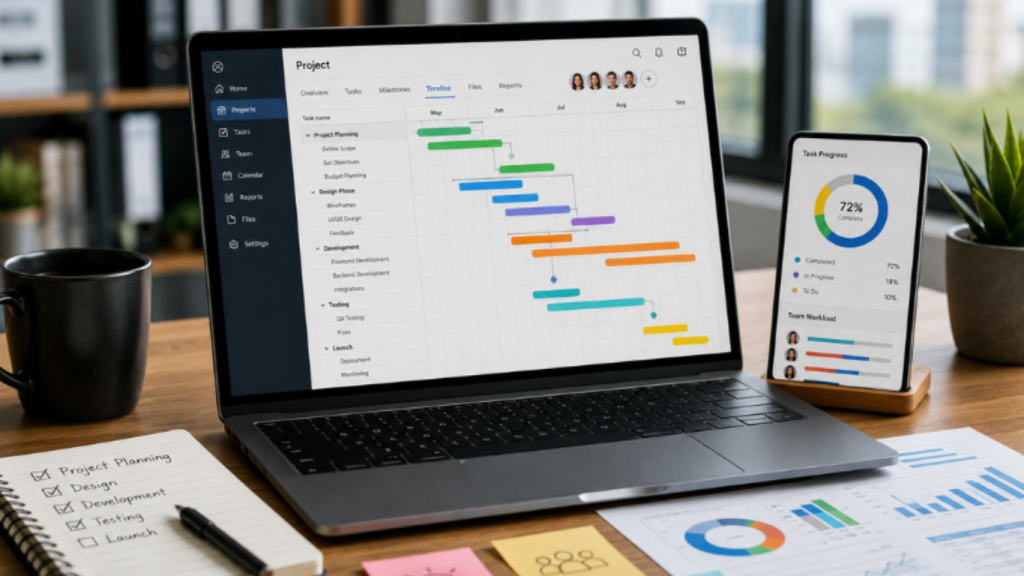
Project management is the engine that keeps teams aligned, deadlines met, and budgets on track — but only when it’s backed by the right software. With hundreds of tools flooding the market, choosing the wrong platform can slow your team down rather than speed it up. That’s why business software and service reviews have become the most trusted starting point for project managers, operations leads, and team directors making software decisions. Rather than guessing based on feature lists or flashy demos, today’s smartest teams rely on peer-verified reviews and structured discovery platforms to find tools that genuinely perform in real working environments. This guide covers the most critical software categories for project management, what to look for during evaluation, and how to build a tech stack that actually keeps projects moving from kickoff to completion.
Why the Right Project Management Software Changes Everything
Project delays, budget overruns, and miscommunication don’t always stem from team failures — they often stem from inadequate tools. A project management platform that lacks proper dependency tracking, resource allocation, or cross-team visibility creates invisible bottlenecks that compound over time.
This is exactly why Business Software and Service Reviews from project managers who’ve worked across multiple tools are so valuable. They highlight how a platform performs under real deadline pressure, how its reporting holds up during stakeholder reviews, and whether its collaboration features actually reduce — rather than add to — communication overhead.
When project outcomes and team morale are on the line, making software decisions based on verified experience rather than vendor marketing isn’t just smart — it’s responsible leadership.
Core Software Categories Every Project Management Team Should Know
Project management operations extend far beyond task lists and Gantt charts. Here are the primary software categories teams should evaluate to build a complete, effective project management stack:
Project management platforms handle task assignment, milestone tracking, dependency mapping, progress dashboards, and cross-team workflow visibility — the operational backbone of any project-driven organisation.
Team collaboration software centralises communication, file sharing, and real-time collaboration, keeping distributed teams connected without relying on scattered email threads.
Time tracking software records how hours are allocated across tasks and projects, enabling accurate billing, resource planning, and productivity analysis.
Resource Management Software helps project leads allocate team capacity, balance workloads, forecast resource availability, and prevent burnout across concurrent projects.
Reporting and Analytics Software transforms project data into stakeholder-ready dashboards, progress reports, and performance insights that support informed decision-making.
Reading well-researched business software and service reviews across all of these categories ensures you choose tools that complement each other and fit the way your teams actually work.
What to Look for When Evaluating Project Management Software
Choosing project management software isn’t just about ticking boxes — it’s about finding a platform your entire team will actually use, consistently and effectively. Here’s what genuinely matters during evaluation:
Ease of Adoption Across Skill Levels. The most powerful project management platform is useless if only tech-savvy team members can navigate it. Look for intuitive interfaces that non-technical team members can adopt without weeks of training.
Customisation and Workflow Flexibility. Every organisation runs projects differently. Software that forces rigid workflows onto your team creates more friction than it removes. Configurability is key.
Integration with Existing Tools. Project management doesn’t happen in isolation. Your platform must connect cleanly with communication tools, CRMs, document storage, time tracking, and billing systems.
Real-Time Collaboration Features. Async work is the norm for distributed teams. Software with real-time updates, comment threads, and instant notification systems keeps everyone aligned without meeting overload.
Scalability as Teams and Projects Grow. A tool that works perfectly for a 10-person team may buckle under a 100-person organisation. Always validate scalability through business software and service reviews before committing long-term.
Spotlight: SaasTrac — Your Go-To Platform for Project Management Software Discovery
For project managers and operations leaders who want to research tools thoroughly before investing, SaasTrac is the platform purpose-built for smarter software discovery. SaaStrac is a trusted review and discovery hub where businesses — from growing startups to established enterprises — find the right software confidently and efficiently.
Here’s why SaasTrac is genuinely valuable for project management software buyers:
- 500+ software categories to explore and filter — including project management, team collaboration, time tracking, resource planning, marketing automation, and dozens of adjacent business functions
- 700+ in-depth reviews from verified users and industry experts, offering honest, practitioner-level perspectives on real-world tool performance
- 1,000+ trusted reviews across the platform, giving project leads and decision-makers the peer-backed confidence to invest wisely
- SaasTrac Awards 2026 — spotlights the top 50 software solutions recognized across key categories, making it easy to identify community-vetted, high-performing project management tools
- AI Agents Hub — a dedicated section covering AI-powered tools reshaping project management through intelligent scheduling, predictive risk alerts, and automated status reporting
- Best Deals section — aggregates the best current software offers so project-driven businesses can access premium tools without straining operational budgets
- Vendor registration feature — software providers list their tools directly, keeping the marketplace competitive, current, and comprehensive for active buyers
- Write for Us program — verified users and industry professionals contribute original reviews and insights, ensuring the platform reflects genuine hands-on experience
When it comes to finding trustworthy business software and service reviews for project management tools, SaaSTrac gives decision-makers everything they need in one well-organised, searchable platform.
Common Mistakes Teams Make When Choosing Project Management Software
Even experienced project leaders make avoidable errors during software selection. Here’s what to watch out for:
Buying for the demo, not the workflow. Project management demos are designed to impress. Always test a platform against your actual project types, team structure, and reporting needs — not the vendor’s curated use cases.
Overlooking administrator complexity. Managing user permissions, project templates, and integration settings can become a full-time job if the platform isn’t well designed for administrators. Always evaluate the backend experience alongside the end-user interface.
Choosing tools that don’t scale with hybrid teams. Remote, in-office, and hybrid work environments each have different collaboration requirements. Software that works for fully co-located teams may create gaps for distributed project structures.
Ignoring post-purchase support quality. Implementation support, onboarding resources, and responsive customer service matter enormously once you’re live. Read business software and service reviews that specifically address what happens after the contract is signed.
How to Use Reviews to Build a Stronger Project Management Stack
The best project management stacks aren’t built in a day — they’re assembled thoughtfully, with each tool earning its place through performance. Here’s how Business Software and Service Reviews can guide that process at every stage:
Begin with workflow mapping. Before evaluating any tool, document how your projects actually flow — from initiation and planning through execution, review, and closure. This map becomes your evaluation framework.
Seek out reviews from your project type. A software review from a construction project manager carries different insights than one from a digital agency or product development team. Context always matters when interpreting peer feedback.
Focus on long-term user satisfaction. Initial impressions often look positive — what reveals a platform’s true quality is how users feel after six months of daily use. Prioritise reviews that reflect sustained experience over time.
Validate integrations through peer feedback. Integration claims on vendor pages aren’t always reliable. Business Software and Service Reviews from users who’ve actually connected your core tools reveal whether those integrations hold up in practice.
Conclusion
Great project management starts with great tools — and great tools start with informed decisions. Skipping proper research and relying on first impressions is a risk that costs teams time, budget, and momentum. Grounding your software selection in trusted business software and service reviews from real project professionals is the most reliable path to a stack that delivers. Platforms like SaaSTrac make that research fast, structured, and comprehensive — with 500+ categories, 700+ expert and user reviews, and award-recognised tools in one organised destination. Start building your project management stack smarter at saastrac.com.
Frequently Asked Questions (FAQs)
Q1. Why are business software and service reviews critical for project management tool selection?
Project management software affects every team member’s daily workflow. Peer reviews from professionals running similar projects reveal usability, reliability, and integration realities that vendor demos never fully disclose.
Q2. What is SaasTrac, and how does it support project management and buyers?
SaasTrac is a software discovery and review platform with 500+ categories and 700+ verified reviews. It helps project teams research, compare, and confidently select tools matched to their specific workflows and team structures.
Q3. What is the most important feature to look for in project management software?
Workflow flexibility and team adoption ease are typically the highest priorities — a powerful platform no one uses consistently delivers zero value regardless of its feature depth.
Q4. How frequently should project management software be re-evaluated?
Annually, or whenever team size, project complexity, or organizational structure changes significantly enough to create workflow gaps that current tools can no longer address effectively.